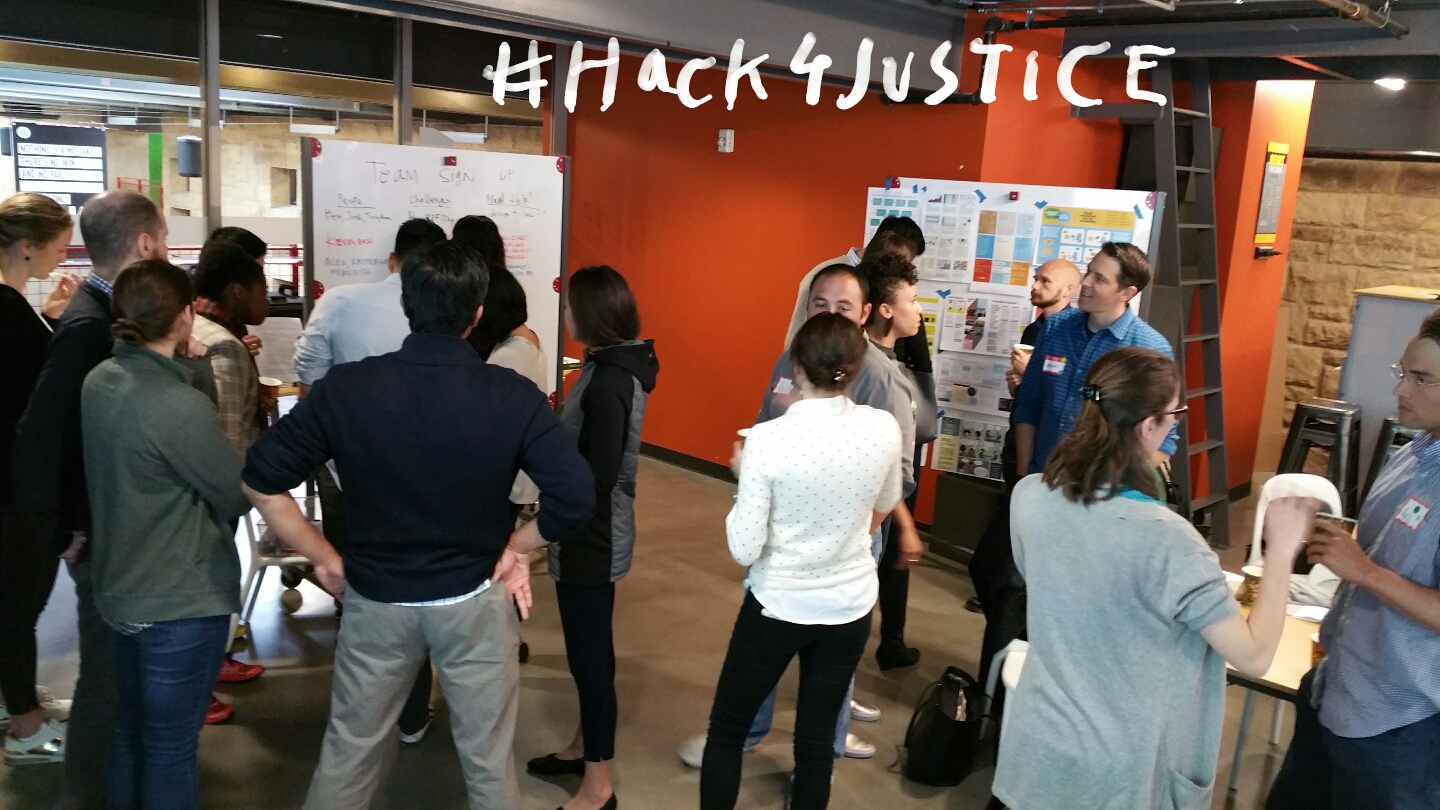

We had an amazing turnout, with a very healthy mix of designers, technologists, policy-makers, and lawyers come together on a grey Saturday morning,
What we did
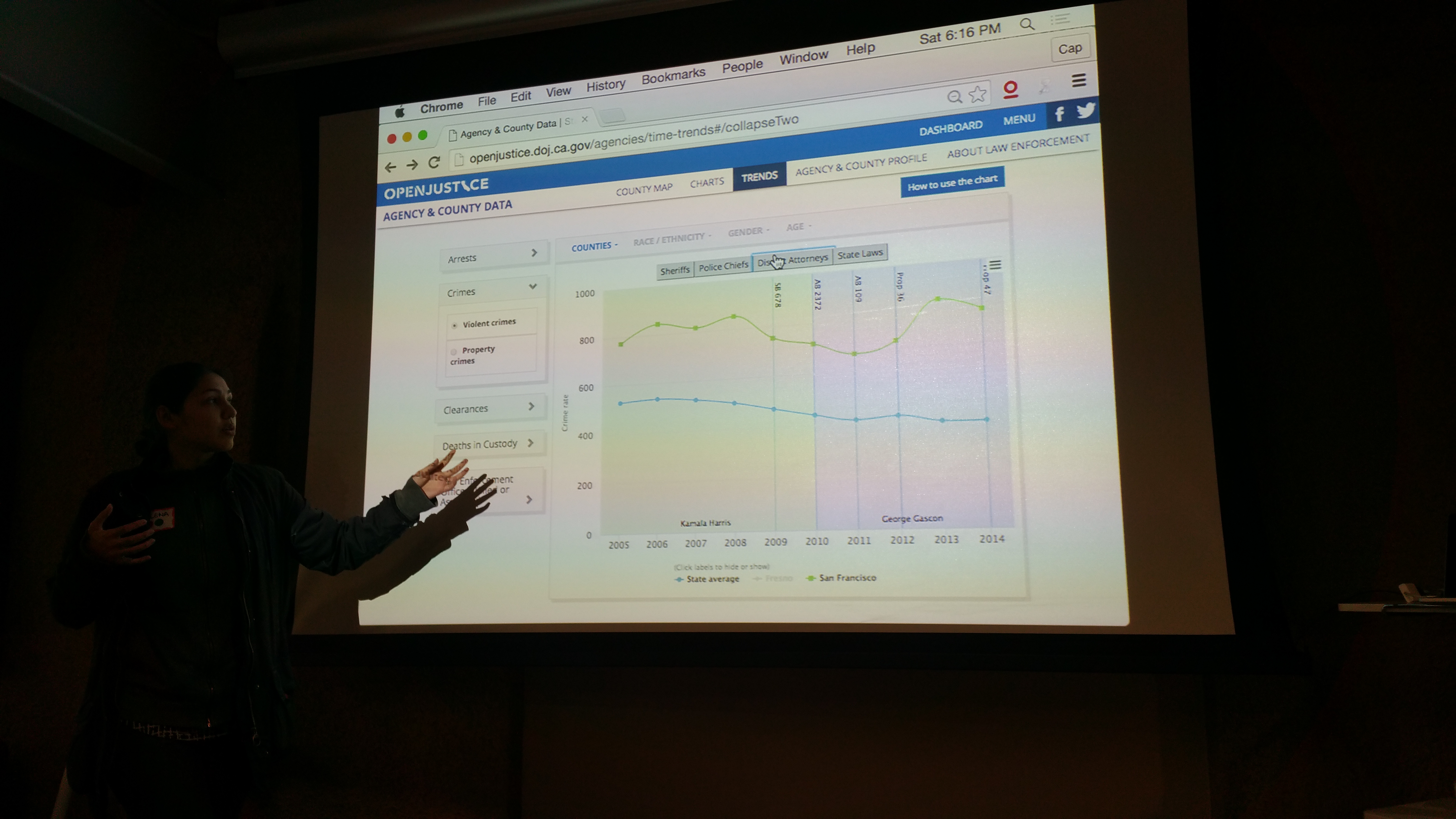
The day was loosely structured. At the top, we had informal presentations from the DOJ about their OpenJustice platform, their mission to make data more user-friendly and more accessible, and their hopes for the day’s work. There were two challenges they posed to the group:
- Visualizing the Criminal Justice System and its Jargon: The goal here is to develop media, tools, and other things to help people understand the system, its processes, and its jargon. Aimed more for people who are either going through the system now, or who are their family/advocates. It could also be a civic education tool, to help students, members of the public, and even journalists literate in how this very confusing system operates.
- Making Criminal Justice Data come alive: How can we make all the data that the DOJ gathers about the justice system in California be more useful and engaging? Are there other displays, data sets, interactive features, or beyond that could make this data more meaningful? The target users here are researchers, journalists, policy-makers, and engaged citizens who want to understand the realities of how the justice system is operating, and to figure out better ways to intervene and improve it. (As well as, even, what better questions we can be asking about the system — where to be looking to find sparks for new solutions).


Our Working Session
Most of the day was spent in small groups, developing out possible use cases for visual guides and data visualizations, and then creating initial demo’s of these new initiatives.
We the organizers let the groups choose themselves. Most people didn’t know each other before, so we asked them to tag their name-badge with small colored stickers that would indicate their skillsets — tech, design, policy, and law. We only laid down the rule: no more than five people per team, and try to get a healthy mix of colors (skills) on your team.

Everyone mixed and after 10 minutes, signed up for what team they’d work on, which of the two challenges they’d tackle, and what use cases or topics they would start off with.
For the next five hours, the groups worked together to put a proposal and a working demo together for a new tool, site, or service for consideration by the DOJ and the rest of the group. As the organizers, we floated and brought in some coaches and mentors to help out, if any teams needed legal, tech, or data help. But largely we tried to stay out of the groups’ way — the magic was in seeing them come together, figure out something specific to solve for, and then bring their own different knowledge and skills to designing a better way of doing things.

The Concepts and Demo’s
The Prop 47 Filing Tool came from an existing Code for America project, Clean My Record, but builds in more functionality for Californians who want to get their past convictions for select drug crimes to be reduced from felonies down to misdemeanors. The tool is not do-it-yourself, because, from experience of law students and lawyers on the team, it’s actually quite hard for a lay person to figure out what they’re eligible for and to determine which course best suits their preferences.
The team was Ben Chida, Josh Steele, Tara Lundstrom, and Aaron Stienstra.
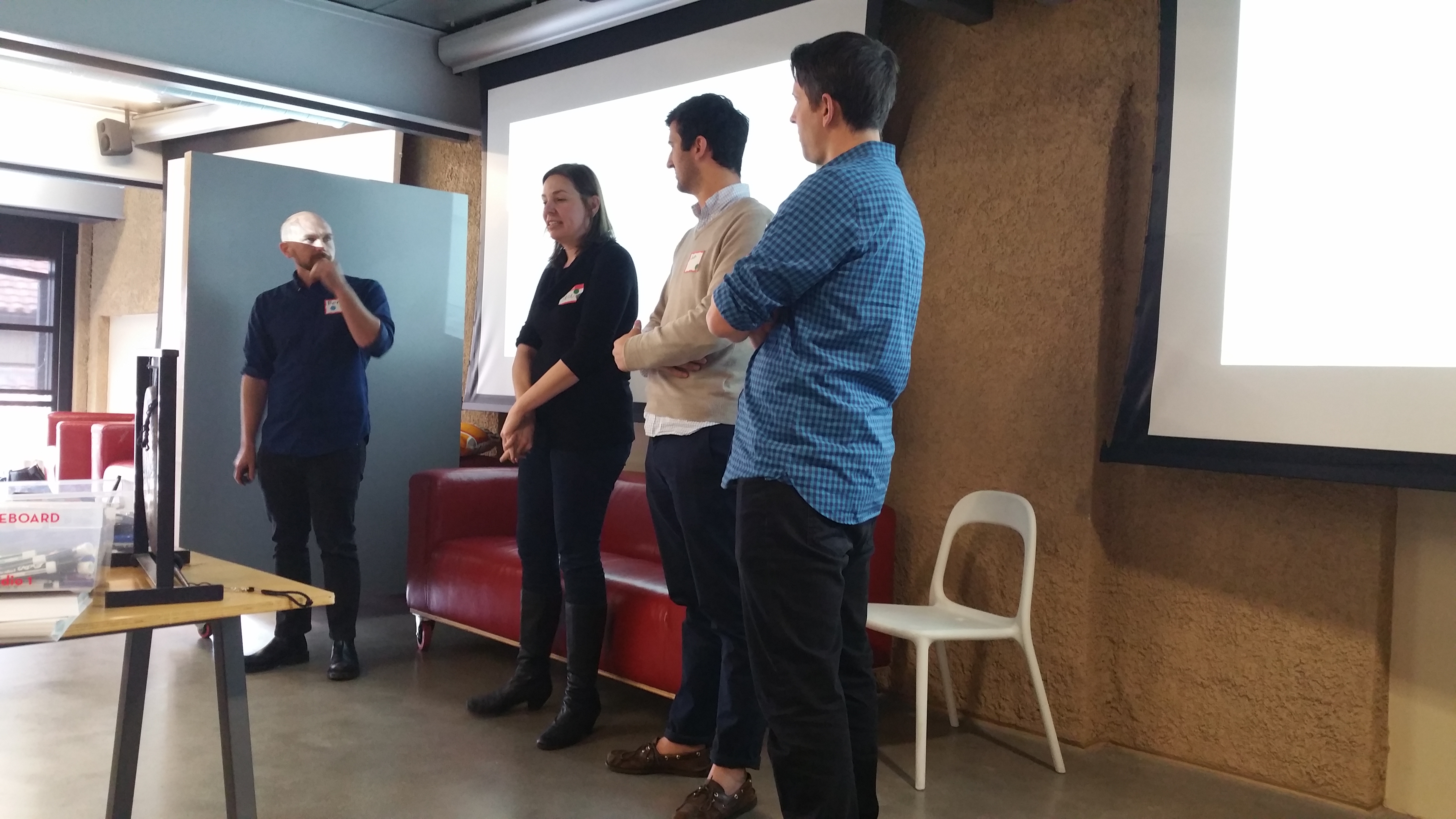
The tool has two user streams: the person considering applying, who can enter (on a very simple mobile-friendly interface) the basics of their case information. Then there is the lawyer/advocate, who can screen this person’s information, prep what options and questions arise out of this intake information, and then do a real phone call to them, to talk through the options and get decisions made. Then the lawyer/advocate can follow through on the application and continue the communication through text, email, or phone.
The goal here is not to eliminate the lawyer step — the group knew from experience that people need the conversation and lawyer’s perspective. But it’s to streamline intake, structure the lawyer’s thinking and conversation, and to automate/easily populate the forms to save the lawyer time.
Chat for Justice is an SMS-based service aimed at people like moms, wives, and other advocates for people who have been arrested and are now in the criminal justice system. The service would provide quick, responsive mobile messages to these family members and advocates, to help them understand what is happening to their loved one in jail, and to give them actionable items to do to help them out.
The team behind it is Kevin Xu, of Stanford Law School, and Ben Peterson, of Code for America in Salt Lake City.
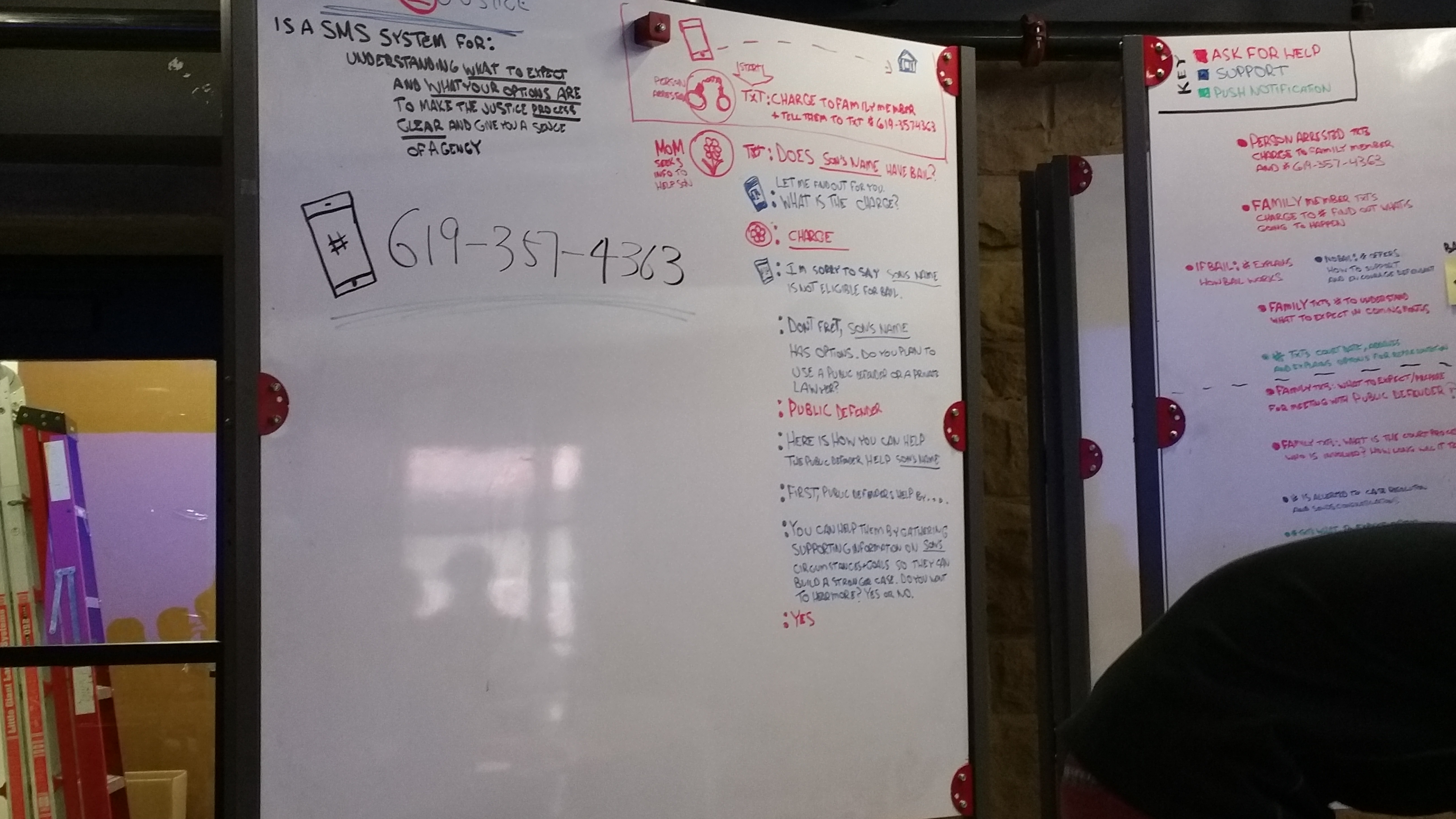
One version of this tool is personalized with the person’s case information. This would be an ideal version, if the justice system would allow for use of the data — about the person’s charges, location, bail, and other details. This would let the advocate on the outside start coordinating a strategic plan: how can I raise bail, how much do I need to raise, where can I see my loved one, how can I get a lawyer or other support to help deal with the coming prosecution?
Another variation, that is likely easier to deploy sooner (because it doesn’t require the system to provide case data), is a generalized stream of information and strategic tips about the criminal justice system. It’s for a similar user and use case, but provides them more general educational resources and links. What does misdemeanor vs. felony mean? How does bail work? Will you get a free lawyer, and how does that work? What are the next stages coming up?
Both of these types of chat services would be conversational, quick, and supportive for a person who is suddenly in crisis mode, trying to figure out ways to help their loved one from the outside.
Additionally, this tool could help coordinate the family advocate and the Public Defender. The family advocate could figure out how to be collecting information about their loved one’s personal life, charges, etc. that they could then supply to the PD in order to help humanize the person, give relevant information to be used in the case, and help the PD get a jump on their own work.
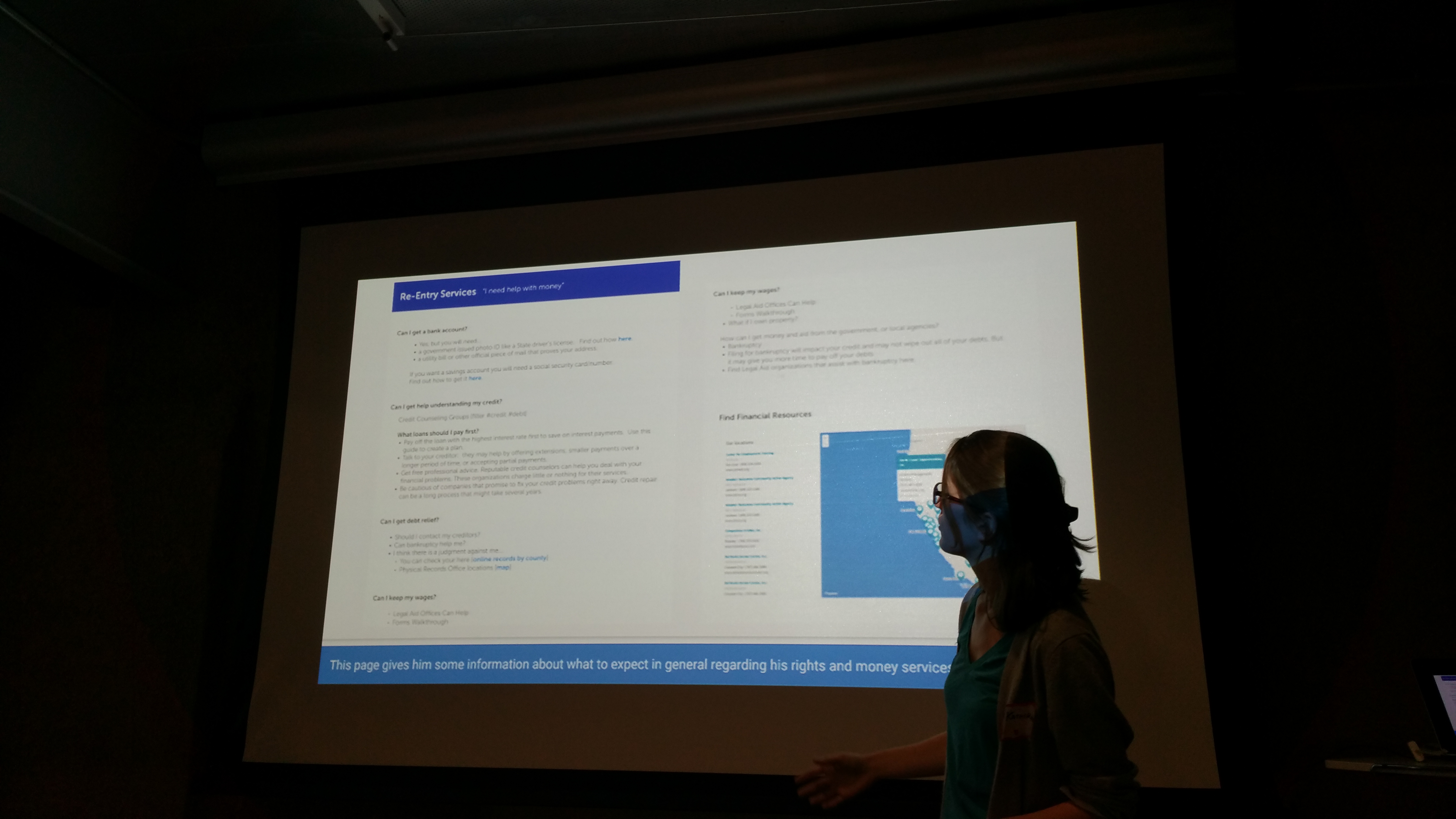
Re-entry Assistance is a web app that helps a person who’s come out of prison/jail to go to a centralized site, see the menu of services that they might need (legal, disability, medical, social, mental health, etc.) and a map of local service-providers they could connect with.
The team here was Alex Entrekin, Katherine Nammacher, and Meredith Hitchcock.